
Oxygen, Equipment, and Reliability
The ClimbThis flow follows the expedition’s reliance on equipment and communications, from supply disputes to their failures at critical moments.
increasing Bearing strength in each event
 decreasing
Bearing strength in each eventdecreasingThe Equipment Promise
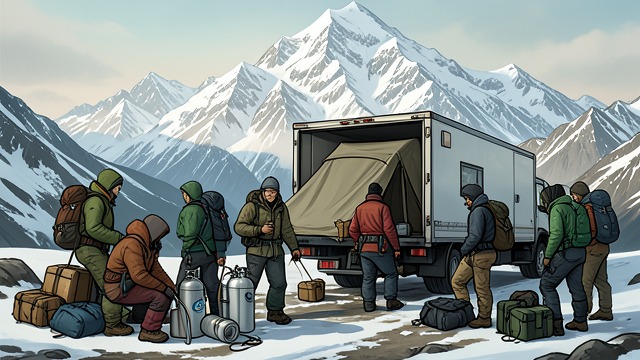
The Equipment Promise
Procurement
Mountain Madness negotiates for oxygen, regulators, masks, and a high-altitude tent, all essential to the summit plan.
Logistical Uncertainty
The supplies are delayed, demonstrating how a remote expedition depends on fragile international transport and commercial agreements.
Old Radios
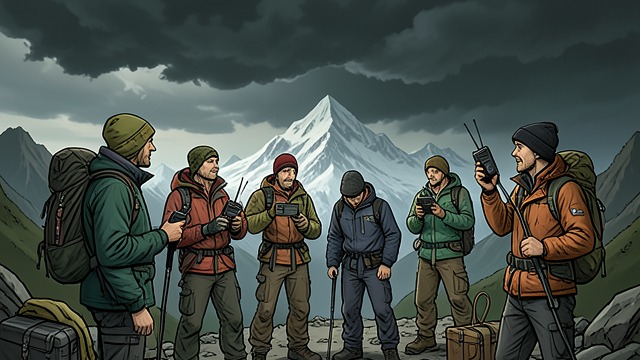
Old Radios
Communication Concern
Martin Adams questions the expedition’s aging two-way radios, while guides and clients do not all carry reliable devices.
Forewarning
The equipment concern anticipates summit day, when important messages must pass through several people and languages.
Missing Rope Anchors
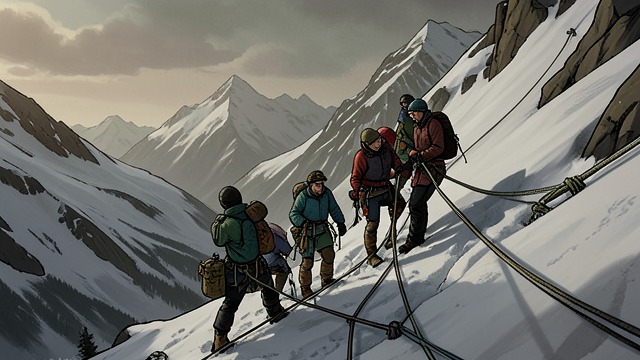
Missing Rope Anchors
Route Improvisation
Neal Beidleman and Anatoli Boukreev fix rope as they climb, but they lack suitable anchors for one exposed stretch.
Bottleneck
The incomplete route slows movement and makes clients negotiate terrain that they had expected to be secured.
Radio Silence
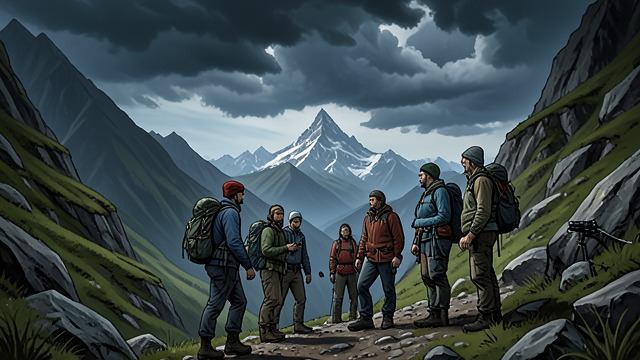
Radio Silence
No Direct Link
Anatoli Boukreev and Neal Beidleman have no radio, while Scott Fischer and Lopsang Jangbu Sherpa hold the primary devices.
Fragmented Decisions
The guides cannot coordinate changes or easily learn who is in trouble, weakening the team’s ability to respond as conditions change.
Systems Under Stress
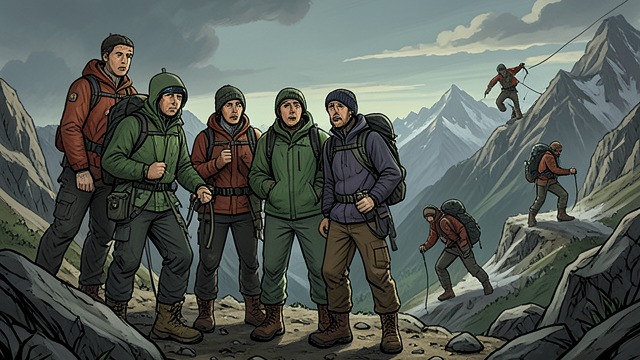
Systems Under Stress
Incomplete Information
Base Camp receives delayed, altered, and contradictory reports about climbers’ locations and conditions.
Human Consequence
Weak communications, like limited oxygen and absent rope work, do not cause the storm but magnify its danger.
February–March 1996
April 1996 at Base Camp
May 10, 1996, near the summit
May 10, 1996, during the afternoon
night of May 10–11, 1996
